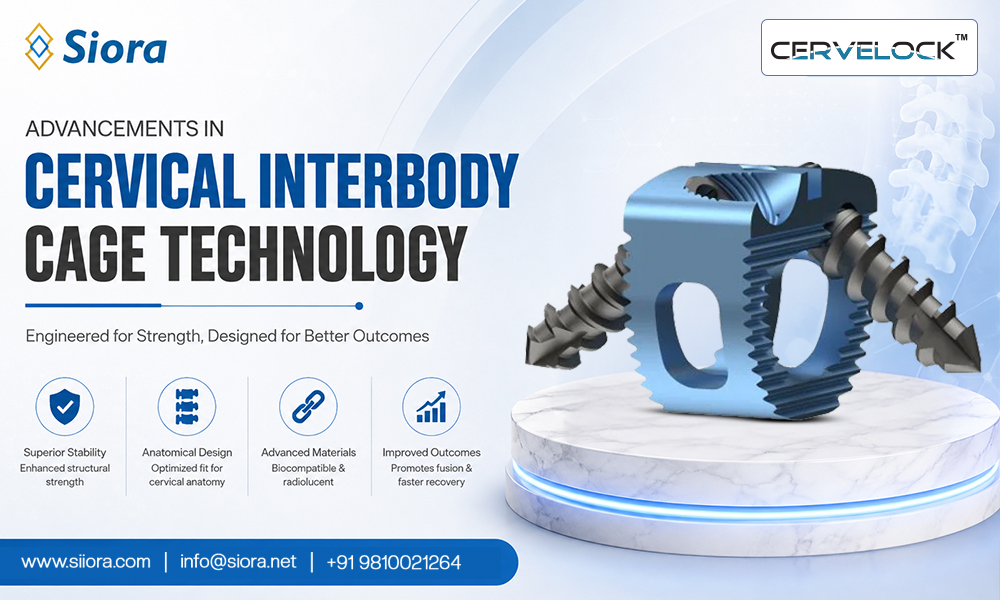
Neck pain, cervical disc degeneration, and spinal instability can significantly affect a person’s quality of life. When conservative treatments no longer provide relief, surgeons often recommend cervical spine fusion to restore stability and reduce pain. One of the most important components of this procedure is the cervical interbody cage. Over the years, these implants have evolved from simple structural devices into highly engineered solutions that support fusion, preserve alignment, and improve surgical outcomes.
Modern cervical interbody cage technology continues to advance, giving spine surgeons greater confidence while offering patients better recovery experiences.
Understanding the Role of Cervical Interbody Cages
A cervical interbody cage is a medical implant placed between two cervical vertebrae after the removal of a damaged or degenerated intervertebral disc. Its primary purpose is to restore disc height, maintain spinal alignment, and create a stable environment where new bone can grow, ultimately achieving spinal fusion.
The cage also helps relieve pressure on compressed nerves and the spinal cord, making it an essential part of anterior cervical discectomy and fusion (ACDF) procedures.
Advanced Biomaterials Improving Performance
One of the most notable developments in cervical interbody cage technology is the use of advanced biomaterials. Earlier implants were commonly manufactured from titanium, valued for its strength and durability. Today, surgeons can also choose cages made from polyetheretherketone (PEEK), porous titanium, or hybrid material combinations.
PEEK has gained popularity because its elasticity more closely resembles natural bone, helping distribute loads more evenly. It is also radiolucent, allowing surgeons to evaluate bone healing on postoperative imaging without significant interference. Meanwhile, porous titanium cages encourage bone attachment through their textured surfaces, supporting long-term stability.
Anatomically Designed Implants
Modern cervical cages are no longer manufactured using a one-size-fits-all approach. They are now available in multiple heights, widths, footprints, and lordotic angles to better match individual patient anatomy.
These design improvements help restore the natural curvature of the cervical spine while reducing stress on adjacent spinal segments. Better anatomical compatibility also contributes to improved implant stability and lowers the likelihood of migration or subsidence.
Surface Technologies Supporting Bone Fusion
Surface engineering has become an important focus in implant innovation. Many newer cervical interbody cages feature roughened, porous, or specially treated surfaces that encourage bone cells to attach and grow into the implant.
This enhanced interaction between bone and implant creates a stronger biological connection, potentially leading to faster and more reliable fusion. Such advancements are particularly valuable for patients with compromised bone quality or those at greater risk of delayed healing.
Minimally Invasive Surgical Compatibility
As minimally invasive spine surgery becomes more common, implant manufacturers are designing cervical cages that simplify insertion through smaller surgical exposures. Streamlined insertion instruments and optimized implant geometry help surgeons position the cage accurately while minimizing disruption to surrounding tissues.
Smaller incisions often translate into reduced blood loss, less postoperative discomfort, and shorter hospital stays, allowing patients to begin rehabilitation sooner.
The Future of Cervical Interbody Cage Technology
Innovation in cervical spine implants continues to accelerate. Researchers are exploring 3D-printed cages with patient-specific designs, bioactive surface coatings, and implants capable of promoting even stronger bone integration. Digital planning tools and advanced manufacturing techniques are also helping surgeons select implants that best match each patient’s anatomy and surgical objectives.
As these technologies continue to mature, cervical interbody cages are expected to deliver even greater precision, durability, and clinical performance.
Conclusion
Advancements in cervical interbody cage technology have transformed cervical spine fusion by combining improved materials, anatomical designs, enhanced surface engineering, and minimally invasive compatibility. These innovations help create a more favorable environment for successful fusion while supporting better alignment and long-term spinal stability. As research and engineering continue to progress, cervical interbody cages will remain an essential component in delivering safer procedures and improved outcomes for patients undergoing cervical spine surgery.
If you are looking for an experienced and reliable spine implants manufacturer, explore the inventory of Siora Surgicals Pvt. Ltd.

