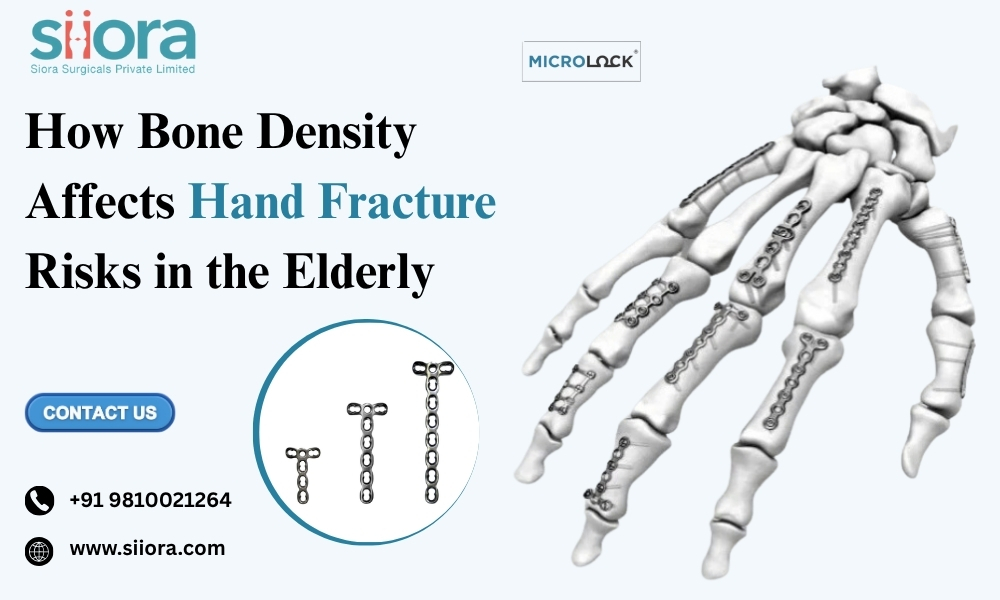
When it comes to treating hand injuries in the elderly, orthopedic specialists often rely on devices like a hand fracture plate to provide support and stability during healing. But there’s something deeper that plays a crucial role in both the likelihood of a fracture and the effectiveness of treatment: bone density. As we age, our bones naturally become weaker and more porous, making them more vulnerable to fractures, even from minor slips or bumps. Understanding the relationship between bone density and hand fractures can help families and caregivers take preventive steps and better manage recovery when accidents do occur.
Aging and the Silent Loss of Bone Strength
Bone is a living tissue that’s constantly being broken down and rebuilt. In young people, this process stays balanced; old bone is replaced by new bone at an even rate. However, after the age of 30, bone mass begins to decline slowly. In post-menopausal women and older men, this decline can become more rapid due to hormonal changes, especially the drop in estrogen. This condition, known as osteoporosis, is often referred to as a “silent disease” because it typically doesn’t show symptoms until a bone actually breaks.
Unfortunately, the bones in the hand are not immune to this process. They may become thinner and more fragile, increasing the risk of fractures even from simple actions like catching a fall or bumping the hand against a hard surface.
The Hand: A Complex Structure at Risk
The human hand is made up of 27 small bones that work together to perform intricate movements, gripping, pinching, writing, and so much more. These bones are constantly under stress from daily activities. In the elderly, whose bones have lost some of their mineral density and elasticity, even a mild force can cause a break.
Fractures in the hand can range from minor hairline cracks to complete breaks. In seniors, the most common causes are falls, which can lead to breaks in the wrist, metacarpals (the long bones of the hand), or phalanges (the finger bones). Low bone density not only increases the risk of these injuries but also affects the healing process.
Recovery Challenges with Low Bone Density
Bones that are low in density don’t just break more easily — they also heal more slowly. This is particularly problematic for elderly patients because hand function is essential for independence. Something as simple as not being able to hold a spoon or button a shirt can greatly reduce the quality of life.
In many cases, orthopedic surgeons may use internal fixation devices like hand fracture plates to stabilize the bones. While these implants are designed to provide support during healing, their effectiveness can be influenced by the density of the bone they’re attached to. Poor-quality bone may not hold screws as well, making surgical planning more complex.
What Can Be Done?
Prevention is always better than cure. While aging is inevitable, there are steps that can be taken to improve or maintain bone density even in the later years of life. Here are some proactive measures:
- Calcium and Vitamin D Intake: These nutrients are essential for bone health. Dairy products, leafy greens, and sunlight exposure can be helpful.
- Weight-Bearing Exercise: Activities like walking or light resistance training can stimulate bone formation.
- Regular Bone Density Tests: Especially for those over 65, checking bone mineral density can help identify issues before a fracture occurs.
- Fall-Proofing the Home: Installing grab bars, improving lighting, and removing tripping hazards can reduce the chances of falls.
Final Thoughts
Hand fractures in the elderly are more than just broken bones; they’re a sign of underlying changes in bone health that need attention. Low bone density doesn’t just increase the risk of injury; it complicates treatment and recovery. By understanding the vital role bone density plays, families and caregivers can take meaningful steps to protect their loved ones from unnecessary pain and extended disability.
If you are planning to become a partner of one of the leading orthopedic devices companies in Jordan, explore the inventory of Siora Surgicals Pvt. Ltd., a renowned orthopedic manufacturer in India with a presence in over 50 countries.
 siiora surgicals pvt. ltd