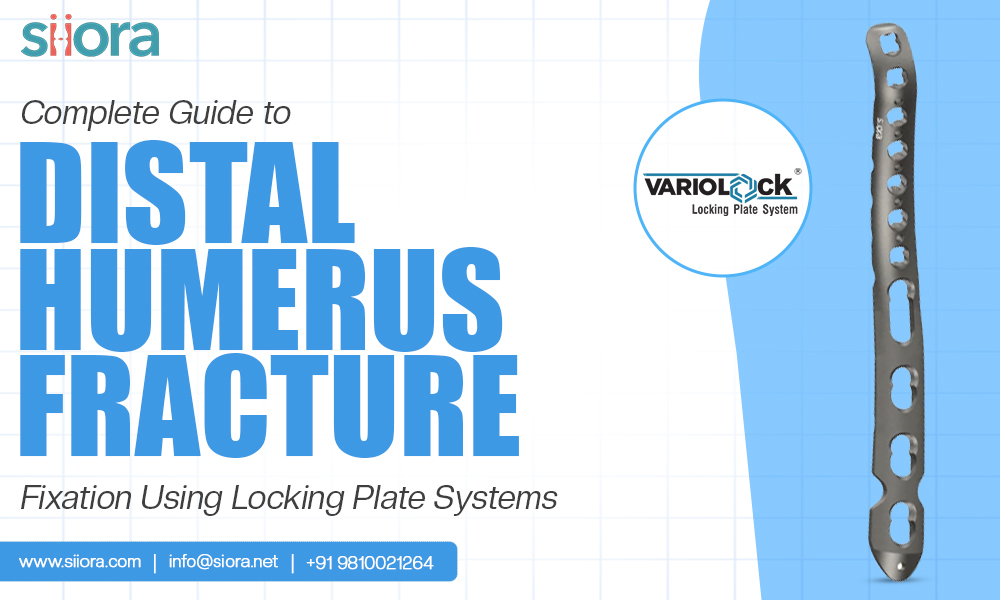
Distal humerus fractures are not something you can take lightly. They involve the lower end of the humerus, close to the elbow joint, and often affect both the bone and joint surface. These fractures are seen after high-impact injuries in younger patients or simple falls in elderly individuals with weak bones.
What makes them tricky is the anatomy. The distal humerus has limited space, thin bone, and multiple small fragments in many cases. Because of this, achieving stable fixation and restoring elbow movement can be challenging.
Why Locking Plate Systems Are Commonly Used?
In recent years, distal humerus plate and other locking plate systems have become a preferred option for fixing distal humerus fractures. The reason is fairly straightforward—they provide better stability, especially in complex or osteoporotic fractures.
Unlike conventional plates, locking plates do not rely entirely on bone quality for stability. The screws lock into the plate. This creates a fixed-angle construct, making the whole system more stable, even when the bone is weak or fragmented.
For surgeons, this means fewer chances of fixation failure and better control over fracture alignment.
Surgical Approach and Fixation Strategy
Fixing a distal humerus fracture with locking plates requires careful planning. In most cases, proper exposure of the joint is necessary to understand the fracture pattern clearly. Surgeons often use posterior approaches, sometimes with an olecranon osteotomy, to get better visibility.
Once the fracture is exposed, the first step is always reduction. Getting the joint surface aligned properly is critical. Temporary fixation using K-wires is commonly done before placing the final implants.
Locking plates are usually applied in a dual plating configuration. This means placing two plates at specific angles to each other—either parallel or perpendicular. Both methods are used depending on the fracture type and surgeon preference, but the goal remains the same: stable fixation that allows early movement.
What Are the Benefits of Locking Plate Fixation?
One of the biggest advantages of locking plate systems is stability. Even in comminuted fractures, they provide a strong construct that holds fragments in place.
Some practical benefits include:
- Better fixation in osteoporotic bone
- Reduced risk of screw loosening
- Improved alignment control
- Early mobilization of the elbow
Early movement is especially important. The elbow joint tends to become stiff quickly, so stable fixation that allows rehabilitation is a major advantage.
Challenges and Points to Keep in Mind
Despite their advantages, locking plate systems are not free from challenges. Soft tissue handling is critical, as excessive dissection can affect healing. Plate positioning also needs to be precise to avoid irritation or hardware prominence.
Another point to consider is screw placement. Since the distal fragment is small, placing multiple screws without joint penetration requires attention and experience.
Final Thoughts
Distal humerus fractures can test both skill and patience. Locking plate systems have made management more predictable, but good outcomes still depend on proper planning and technique.
At the end of the day, it’s not just about the trauma implant. It’s about restoring anatomy, ensuring stability, and helping the patient regain elbow function as smoothly as possible.
 siiora surgicals pvt. ltd